Highly Pathogenic Avian Influenza (HPAI)
Response & Mitigation Guide
Critical information for poultry producers, veterinarians, and animal health officials to respond quickly and effectively to HPAI incidents
First Response: Reporting Suspected HPAI Cases
If you observe sick birds and suspect Highly Pathogenic Avian Influenza (HPAI), immediate action is critical. Do not attempt to handle the situation independently. Your first and most important step is to contact your state veterinarian or USDA officials before taking any further action. Early reporting enables rapid response, prevents disease spread, and protects the broader poultry industry.
Iowa Reporting (8am-4pm)
IDALS Reporting Line: 515-281-5305
USDA Reporting Line: 515-284-4140
Iowa After-Hours Contact
Dr. Jeff Kaisand: 515-240-6632
Dr. Kevin Petersburg: 515-669-6043
Wild Bird Mortality
USDA Wildlife Services: 866-487-3297
Report any wild bird deaths near your flock immediately
Minnesota Reporting Options
AI Hotline: 833-454-0153
Reportable Animal Diseases (24/7): 800-422-0798
MN Poultry Testing Lab: 320-231-5170
Online Form: Report Sick Birds
Understanding HPAI Response Protocols
Once you've reported suspected HPAI, state and federal animal health officials will guide you through a comprehensive response protocol. Understanding these steps in advance helps you prepare mentally and operationally for what lies ahead. The response involves quarantine measures, epidemiological assessment, potential depopulation, disposal procedures, and compensation processes.
Essential Response Components
Clinical Sign Recognition
Identifying symptoms early—sudden death, respiratory distress, decreased egg production, swelling of head and neck tissues
Immediate Quarantine
Restricting all movement on and off premises to prevent disease spread to other facilities
Epidemiological Assessment
Tracing potential disease sources and exposure pathways to contain the outbreak
Indemnity & Compensation
Understanding appraisal processes and financial support available for affected producers
Depopulation & Disposal
Following humane euthanasia protocols and approved disposal methods including composting or burial
First 72 Hours
The initial three days are critical for containment. State and federal officials will work with you to establish quarantine, conduct testing, and begin response operations.
Movement Controls
Strict quarantine and movement controls will be implemented around infected premises and in designated control areas. These measures protect neighboring farms and the broader poultry industry from disease spread.
Key Resources & Response Plans
Comprehensive resources are available to guide you through every stage of HPAI preparedness and response. Familiarizing yourself with these documents, plans, and guidance materials before an outbreak occurs will significantly improve your ability to respond quickly and effectively. These resources cover federal and state-specific protocols, disposal options, biosecurity measures, and financial assistance programs.
IDALS Premises Preparedness
Comprehensive guidance on clinical signs, quarantine procedures, epidemiological assessment, indemnity processes, depopulation methods, and disposal options
Iowa DNR Livestock Burial Guidelines
Environmental regulations and best practices for on-farm burial of mortality during disease outbreaks
Iowa HPAI Response Plan
State-specific protocols including Appendix 3 on mitigation strategies and coordinated response frameworks
IDALS Biosecurity Resources
Preventive measures and cleaning/disinfection protocols to reduce HPAI introduction risk
Minnesota Resources
Federal USDA Resources
- Chapter 2.2: Federal roles, responsibilities, and planning assumptions for HPAI response coordination
- Chapter 4.2.4: Detailed timeline of HPAI response activities during the critical first 72 hours
- Chapter 5.1: Quarantine establishment and movement control implementation procedures
- Chapter 5.13: Mass depopulation and humane euthanasia methods for infected flocks
- Chapter 5.14: Approved disposal methods including composting, burial, rendering, and incineration
- Chapter 5.21: Appraisal processes and compensation programs for affected producers
Biosecurity & Post-Outbreak Recovery
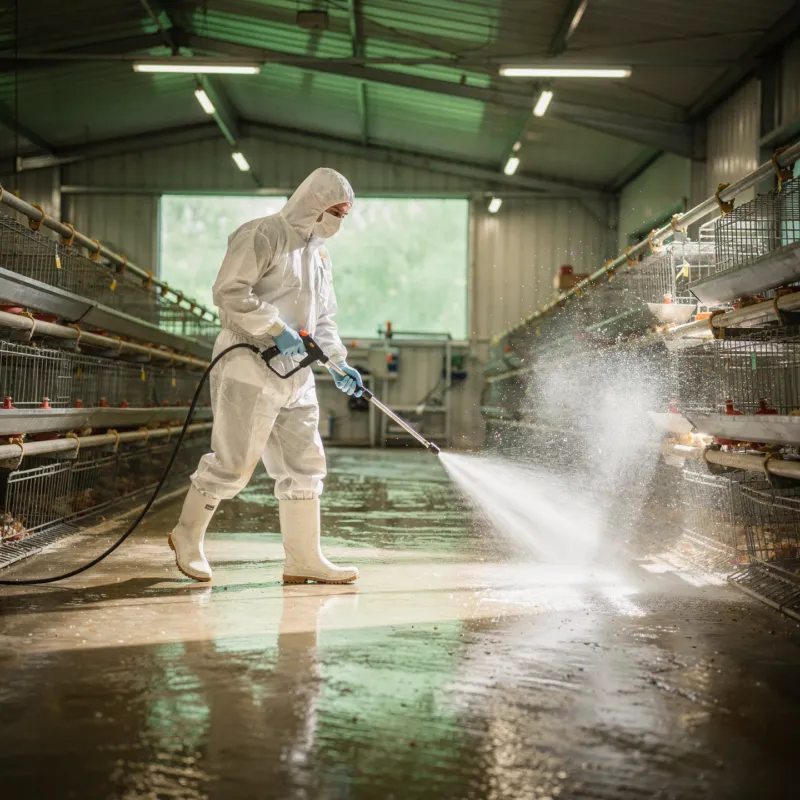
Cleaning & Disinfection Protocols
After depopulation and disposal, thorough cleaning and disinfection (C&D) of premises is essential before repopulation can occur. Proper C&D eliminates viral contamination and prevents reinfection. State animal health officials will provide specific guidance tailored to your facility.
Setting Up C&D Operations
- Establish temporary cleaning and disinfection stations at entry/exit points
- Gather necessary C&D supplies including disinfectants, sprayers, protective equipment
- Create disinfection corridors for personnel and equipment movement
- Document all cleaning procedures for official review